Photographs of forest monasteries tend to show a handful of recurring scenes. They are plain, uncluttered and quiet, which is part of the point.
The two photographs
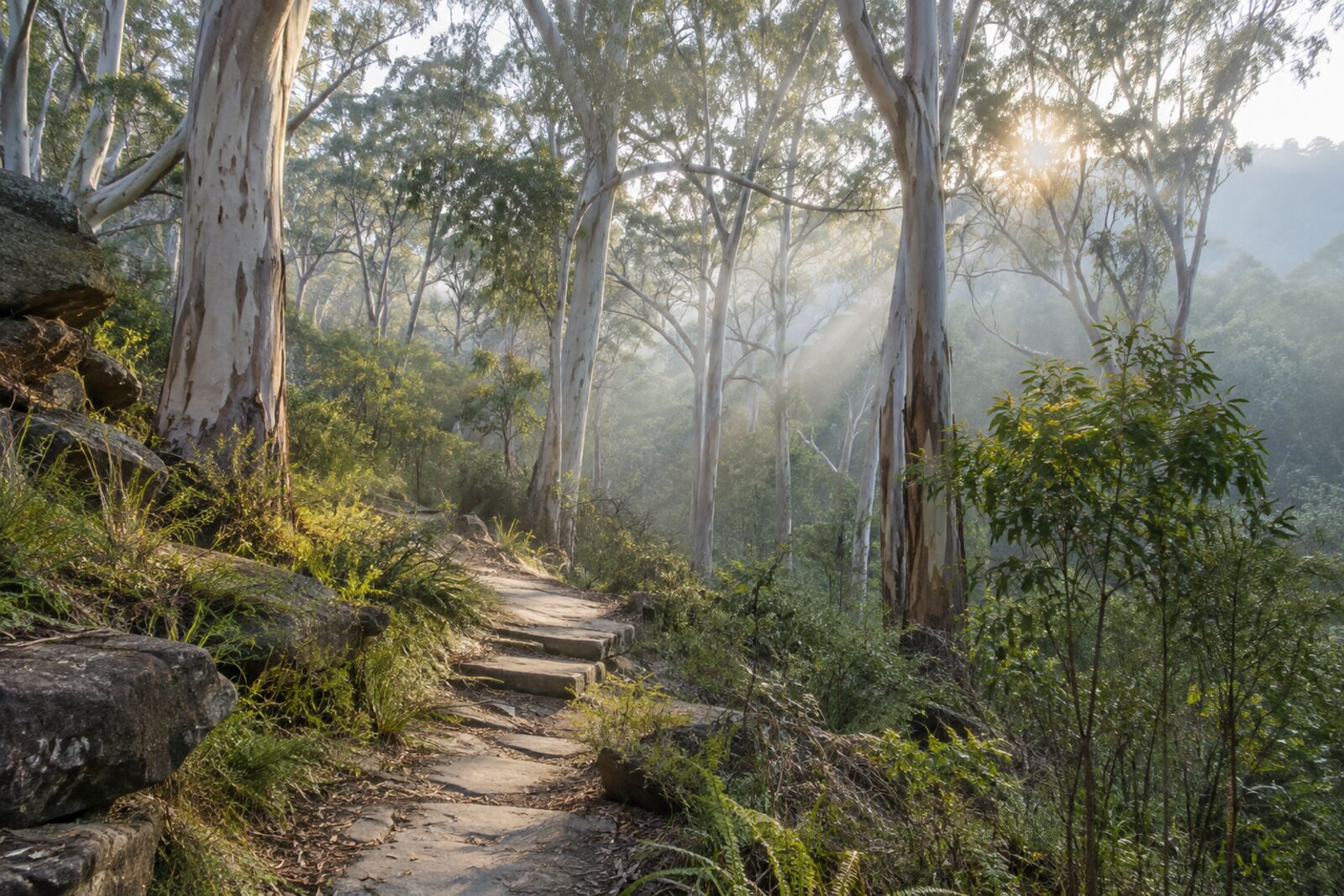
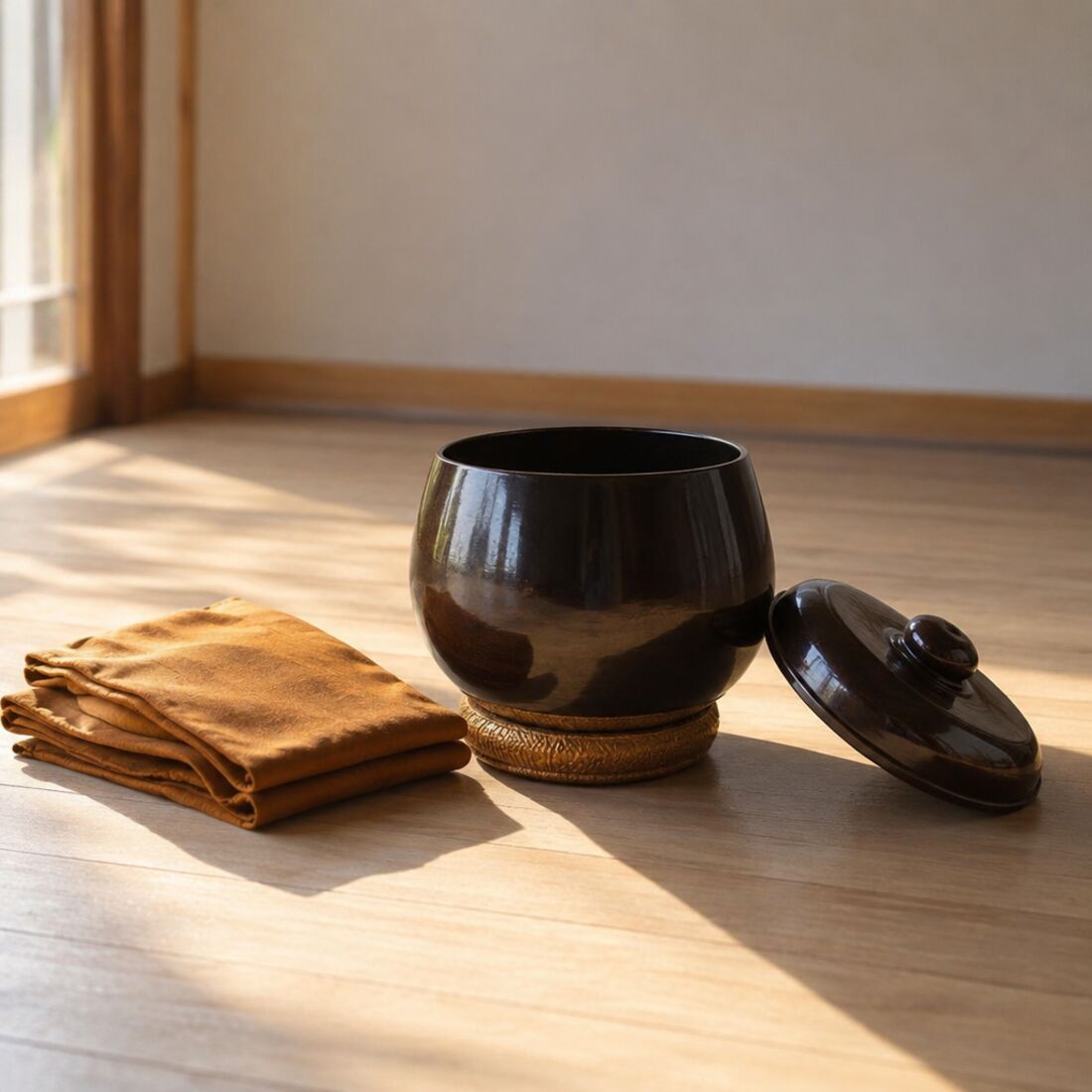
The first shows a forest path: a narrow track of packed earth, bordered by tall trunks and leaf litter, with light falling through the canopy. Paths like this are used for walking meditation, and they also connect the huts, the hall and the kitchen. The second shows an alms bowl resting on a bare floor, a simple dark vessel that stands for the reliance of monastics on offered food.
Familiar scenes
- The sala: the main hall, often open and plain, with a Buddha image, a few flowers and floor space for sitting.
- The kuti: a small hut set among the trees, where a monk or nun lives, studies and meditates alone.
- The walking path: a cleared stretch, often swept, used for pacing back and forth in meditation.
- The meal: bowls arranged in a row, food placed in the bowl and eaten in silence before midday.
- Quiet gardens: raked leaves, a bench, a water jar and a bell, all kept modest and tidy.
Reading the images
What photographs rarely capture is the silence and the routine behind them. The emptiness of a room or the order of a few belongings reflects a way of life in which less is deliberately more. Look at them as invitations to imagine the stillness rather than as records of a particular place.
Keep reading
- What happens when a guest teacher visitsA general outline of what usually happens when a senior guest teacher visits a forest monastery, from the welcome and meal to teaching and farewell.
- Reading and listening: where to beginA starting guide to learning the Dhamma through books, translated suttas and recorded talks, with advice on choosing material and avoiding overload.
- A reading guide to freely distributed Dhamma booksWhy many Dhamma books are printed to be given away, the main types available, and how to read them slowly, critically and with an eye on the translation.